
How Australian Fleets Can Reduce Costs Through Smarter Fuel Tracking
Fuel is the lifeblood of any fleet — and often its largest expense. Whether you run a handful of delivery vans or a nationwide transport operation, keeping fuel use under control directly impacts your bottom line.
In Australia, where fuel prices can fluctuate dramatically and operating costs are rising, fleet managers can no longer rely on spreadsheets or manual reports. They need technology that provides live, accurate insights into fuel consumption, usage patterns, and potential losses.
That’s where smarter fuel tracking comes in.
Modern fleet systems like Cartrack’s MiFleet make it possible to monitor, validate, and manage fuel costs automatically — giving you a clearer picture of where your fuel is going, which vehicles are consuming the most, and where savings can be made.
Here’s how technology-driven fuel management helps Australian fleets cut waste, improve performance, and gain complete financial visibility.
- Why fuel tracking matters more than ever
Fuel is typically one of the top three expenses for a fleet, alongside vehicle maintenance and labour. Even a small change in consumption or price can have a major impact on operating costs.
In Australia, diesel and petrol prices vary widely between states and even between urban and regional areas. Factors such as idling, driver behaviour, vehicle load, and route selection can all cause inefficiencies. Without reliable data, these inefficiencies often go unnoticed.
Traditional fuel management — using paper receipts, fuel cards, or ad-hoc reports — can’t keep up with the pace or complexity of modern fleet operations. It leaves room for:
- Data errors and delays when reconciling transactions
- Potential misuse or fuel theft that goes undetected
- Limited visibility into which vehicles or drivers use the most fuel
- No accurate benchmarking across vehicles or cost centres
Smarter fuel tracking eliminates these blind spots by combining live GPS data, vehicle sensors, and automated validation tools.
- Connecting fuel data with vehicle tracking
The biggest advantage of modern fuel management is integration. Instead of treating fuel as a separate process, systems like Cartrack’s MiFleet connect it directly to your vehicle tracking data.
Every time a vehicle refuels, the system automatically cross-checks that event with its GPS location, odometer reading, and tank capacity. This ensures that each recorded transaction is legitimate and consistent with real vehicle activity.
For example:
- If the litres pumped exceed the tank’s maximum capacity, it’s marked for review.
- If fuel is purchased but the vehicle is not present at the location where the purchase took place.
This data validation saves time, reduces manual reconciliation, and helps detect irregularities that would otherwise be hidden in paperwork.
- Identifying and preventing fuel fraud
Fuel theft and card misuse are ongoing challenges for fleets of all sizes. They might involve refuelling non-fleet vehicles, inflating litres pumped, or claiming unauthorised purchases.
MiFleet’s fuel validation tool helps eliminate these risks through three layers of verification:
- Location tracking – confirms the refuelling happened where the vehicle actually was.
- Volume validation – checks that the amount of fuel aligns with the tank’s capacity.
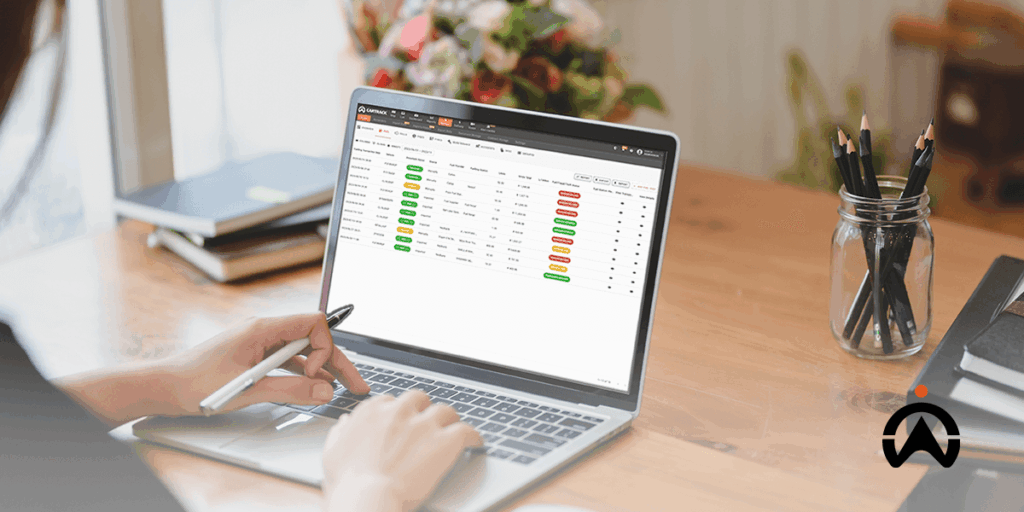
If any rule is breached, the transaction is marked High Risk in the dashboard, allowing the manager to investigate immediately.
These automated checks provide an objective record for every fuel purchase — removing the need for guesswork and helping businesses recover lost value.
- Understanding how driving behaviour affects fuel use
The way your drivers operate their vehicles plays a huge role in overall fuel efficiency. Harsh acceleration, overspeeding, long idling, and poor route planning all increase consumption.
Cartrack connects MiFleet with its Driver Scorecards and Vision AI cameras, enabling a deeper understanding of behaviour that affects fuel use.
For example, if a driver frequently idles for long periods or brakes harshly, this data appears in both their scorecard and the vehicle’s fuel report. Managers can then coach drivers based on specific evidence rather than assumptions.
This not only helps reduce fuel burn but also improves vehicle lifespan, lowers emissions, and promotes safer driving.
- Reducing idling time across the fleet
Unnecessary idling is one of the most common causes of wasted fuel. Even a few minutes per day per vehicle adds up across a large fleet.
Cartrack’s tracking system records every minute a vehicle spends idling and links it directly to fuel usage reports. Managers can identify patterns such as:
- Drivers who idle during deliveries or breaks
- Long idle times in depots or loading bays
- Specific vehicles with mechanical issues causing excess idle
By setting up idling alerts or driver scorecard targets, you can actively manage and reduce this hidden cost.
- Using MiFleet for full cost visibility
MiFleet consolidates all cost categories — fuel, tolls, maintenance, fines, and accidents — into one dashboard. For fuel, it doesn’t just show total spend; it breaks it down by vehicle, driver, supplier, and even time period.
Managers can filter data by cost centre or business unit, making it easy to track performance across multiple teams or regions. The platform also offers:
- Monthly cost summaries showing cost per kilometre
- Trends over time to spot rising consumption or seasonal variations
- Grouped expenses to simplify supplier payments or audits
This level of financial transparency supports better budgeting, supplier negotiations, and internal accountability.
- Integrating with fuel cards and external systems
Many fleets already use fuel cards to simplify purchasing. MiFleet can integrate with these systems to automatically import transaction data, removing manual uploads.
Once imported, each transaction is cross-verified with GPS and vehicle data, keeping records consistent across platforms. This also enables end-to-end cost tracking — from the pump to the profit-and-loss report — with no duplicate entry required.
Integration capabilities mean businesses can continue using their existing card provider while gaining a new layer of control and validation.
- Reporting for smarter decisions
Good decisions rely on good data. MiFleet’s reporting tools turn thousands of transactions into clear, actionable insights.
Standard and custom reports allow you to:
- Compare fuel efficiency across vehicle types or routes
- Measure the impact of driver training programs
- Monitor the success of idling reduction initiatives
- Identify vehicles that may need maintenance due to unusual consumption
Reports can be scheduled automatically or exported in multiple formats. This saves hours of manual work each month and ensures key stakeholders always have the information they need.
- Sustainability and environmental impact
Fuel management isn’t just about cost — it’s also about responsibility. Many Australian businesses are now setting sustainability targets to reduce carbon emissions.
By improving visibility into fuel consumption, MiFleet provides the data required to measure and report on fleet emissions. It supports businesses in tracking CO₂ output, monitoring improvements over time, and aligning with sustainability frameworks such as ISO 14001.
Less wasted fuel also means less environmental impact — a practical win for both budgets and sustainability goals.
- Building a culture of efficiency
The best results come when everyone — from drivers to finance teams — understands how fuel affects business performance.
Cartrack’s integrated system creates a culture of accountability by making fuel data transparent. Drivers can view their own performance through the Driver App, while managers can use real-time dashboards to recognise improvements or address issues quickly.
Over time, this builds a continuous improvement mindset across the fleet
- Building a culture of efficiency
The best results come when everyone — from drivers to finance teams — understands how fuel affects business performance.
Cartrack’s integrated system creates a culture of accountability by making fuel data transparent. Drivers can view their own performance through the Driver App, while managers can use real-time dashboards to recognise improvements or address issues quickly.
Over time, this builds a continuous improvement mindset across the fleet
- Putting it all together: smarter fuel tracking in action
Let’s take a simple example.
A regional transport company running 40 vehicles introduces MiFleet. Within the first month, the system identifies five vehicles with unusually high fuel usage. After investigation, two are found to have extended idle time, while three show repeated small overfills at service stations.
By adjusting routes, coaching drivers, and tightening validation rules, the business cuts average fuel consumption by 8% in three months — without changing its routes or suppliers.
That’s the power of connected fuel intelligence.
- The future of fuel management in Australia
As Australian fleets continue to digitise, integrated fuel tracking is becoming essential. Manual reporting and unverified card data no longer provide the accuracy businesses need to stay competitive.
Solutions like Cartrack MiFleet bring everything together — live data, cost validation, and behavioural insights — into one easy-to-use system. The result is a fleet that runs leaner, cleaner, and more efficiently.
Key takeaway
Smarter fuel tracking isn’t just about reducing fuel bills — it’s about gaining control, insight, and predictability.
With Cartrack, you can:
- Validate every fuel transaction automatically
- Detect irregularities or fuel theft instantly
- Reduce idling and poor driving habits
Discover how Cartrack’s GPS Fleet Tracking can transform your operations
book a free demo today.